Snorkeling Catalina Island

5 (1551 Reviews)
Dominican Republic
From: $79,00
5
(1,551 reviews)
Check

Duration

1 days

Tour Type

Daily Tour

Group Size

10 people

Languages

English, Espanol

About this tour

Summary

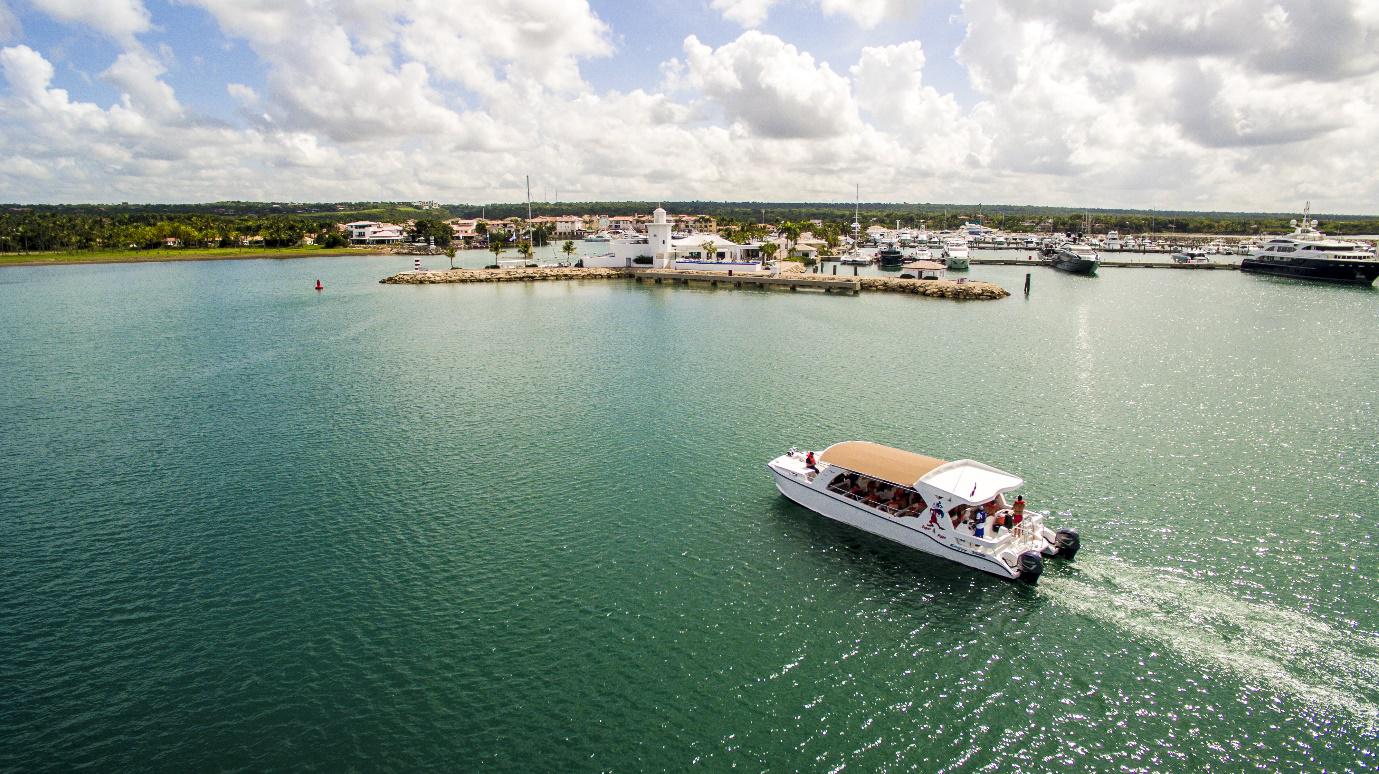
A tour visiting beautiful Catalina Island, well known for its spectacular snorkeling activity. On the way to the island, you will briefly sail through the river mouth of the Chavon River and pass in front of the Casa de Campo Marina. It includes national drinks featured at our open bar, lunch buffet, and free time in an exclusive Beach Club with tropical-Caribbean animation by our crew

Tour description

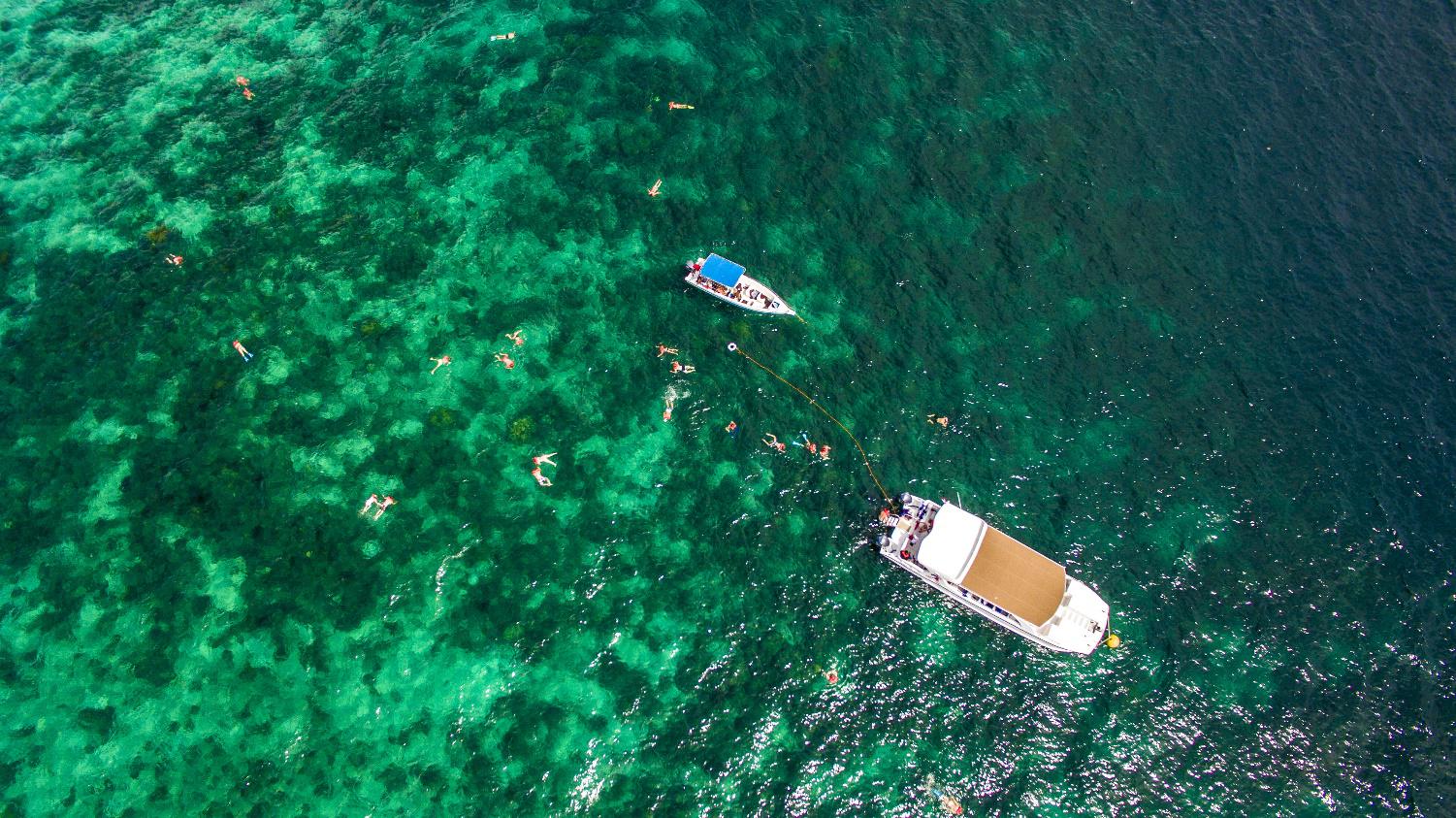
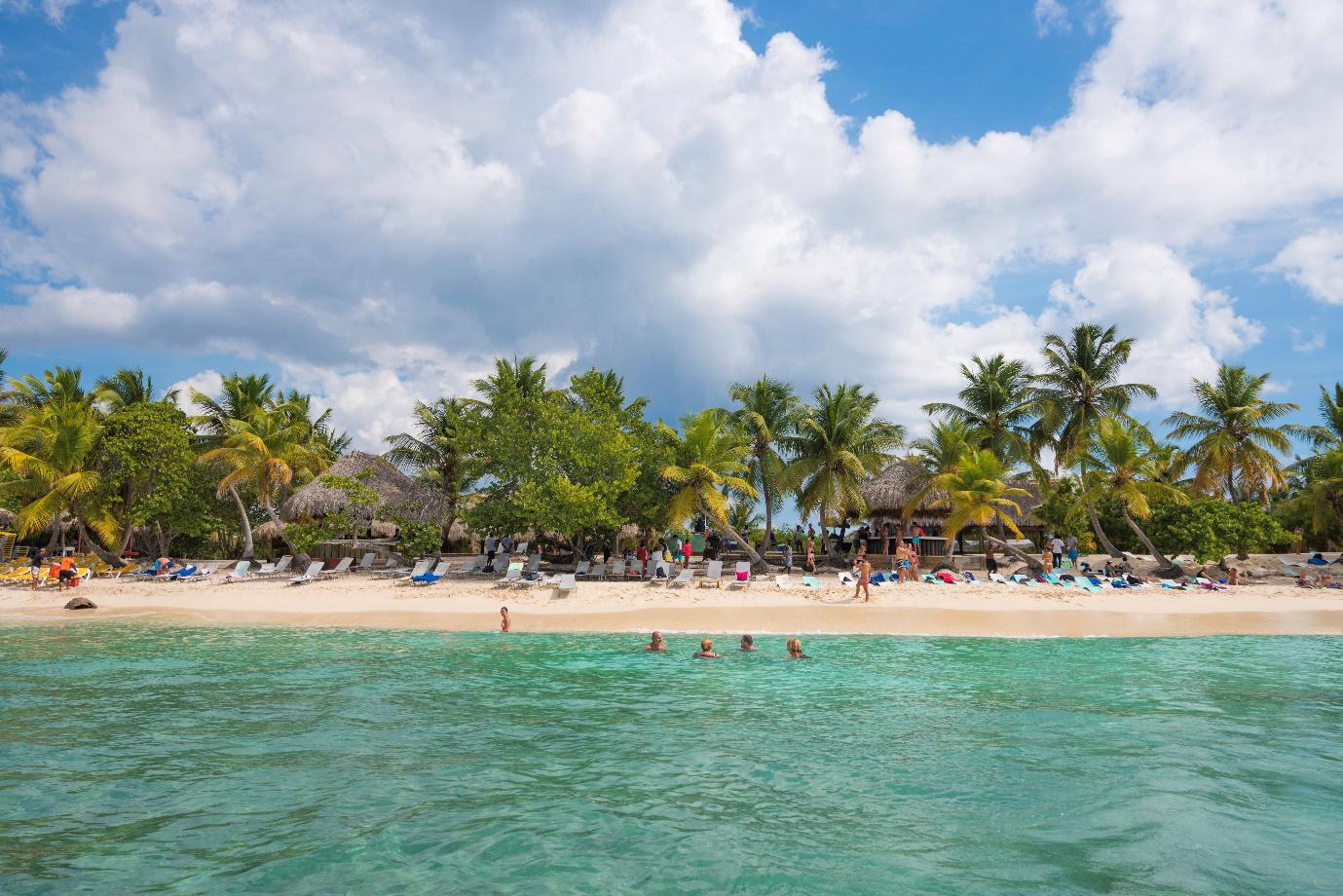
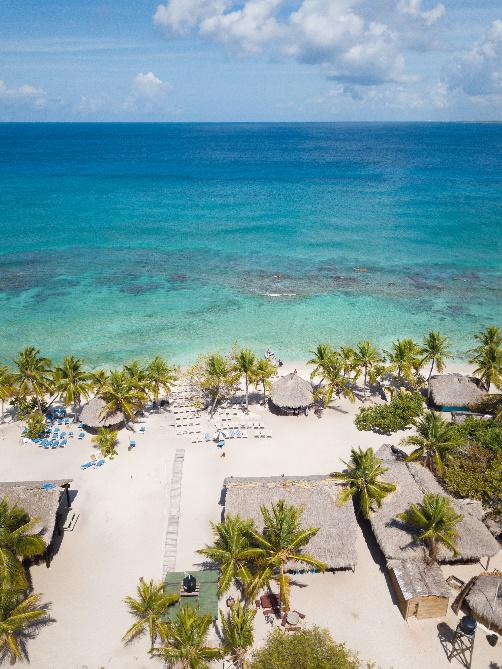
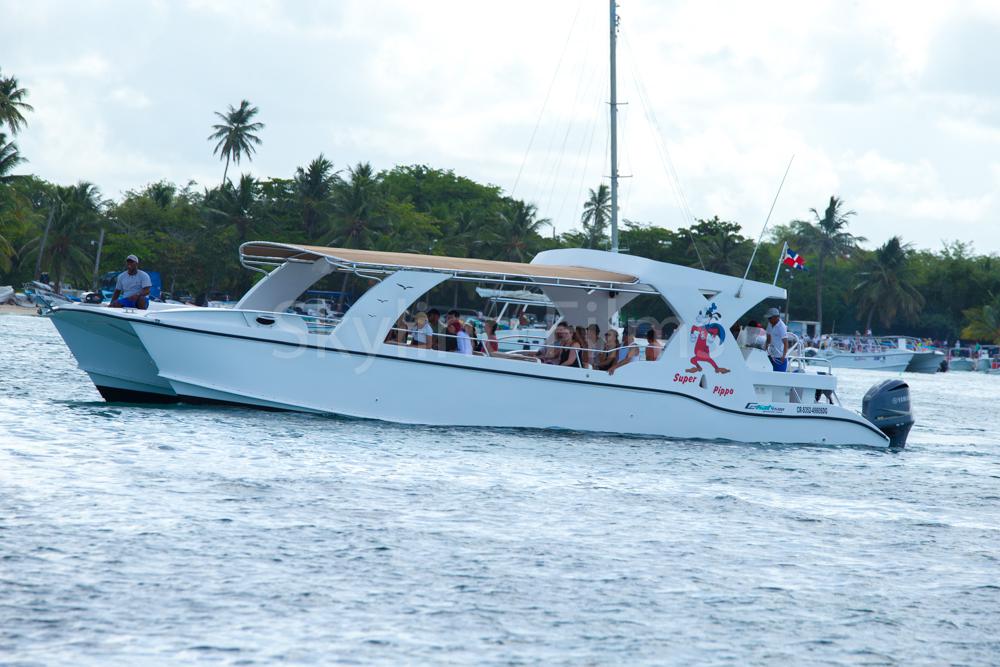
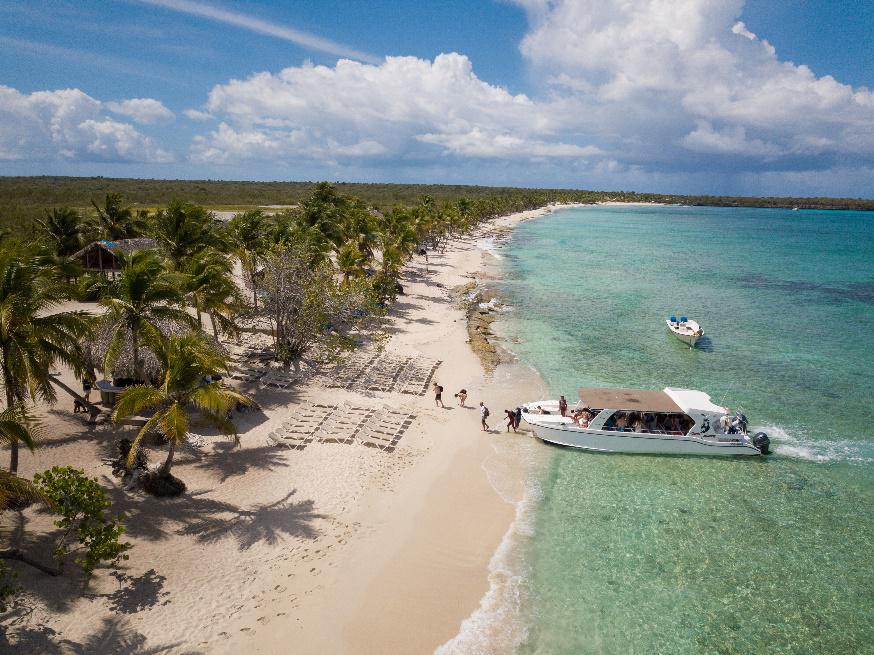
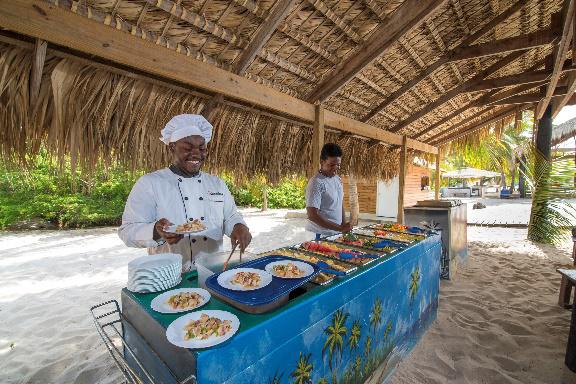
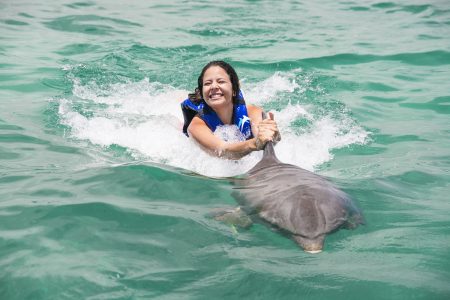
Leaving from the Fishing Village of Bayahibe and sailing towards Catalina Island, guests will pass by Casa de Campo Marina, and make a brief incursion navigating the river mouth of the Chavon River. Guests will then head to Catalina Island to enjoy a spectacular snorkeling location in the well-known area called La Pared. The necessary equipment for the activity will be provided. The tour will continue to the exclusive Beach Club, where guests will have free time to enjoy and spend on the relaxing white beach and crystal-clear sea. Also, our favorite drinks, ‘‘Santo Libre’’ or ‘‘Cuba Libre,’’ will be available in the open bar of national drinks and sodas. Don’t forget to ask for it! A delicious lunch with an assorted buffet will be available. After lunch, according to your desire, you can take part in fun and dances animated by our crew or keep enjoying your free time sunbathing and relaxing.

Note: Alcoholic drinks will be served only after the snorkeling activity.

Highlights

  • Spectacular Snorkeling

  • Views of Rio Chavon and Marina Casa de Campo

  • National drinks open bar

  • Catalina exclusive Beach Club

What’s Included

  • English speaking Tour Guide Service

  • Ground Transportation in Buses with A/C

  • Entrance fee to the National Park of the East

  • Navigation trip, in Sailing Catamaran or Motomaran

  • Snorkel Equipment

  • National Drinks Open Bar

    • Water, Soft Drinks on Board, navigating before Snorkeling

    • Rum, Water, Soft Drinks on Board, navigating after Snorkeling

    • Beer, Rum, Water, Soft Drinks at the Catalina Beach Club

  • Lunch buffet at the Catalina Beach Club

Recommendations

  • Beach Clothes

  • swimwear

  • Comfortable Shoes

  • Beach Towel

  • Sunglasses

  • Sunscreen

  • Hat or Cap

Duration

  • Full Day Activity

  • Activity Duration, 6 to 7 hours

  • Hotels Pick-Up and Transfers to/from Bayahibe, from 1 hour and a half to 2 and a half hours approximately each way

  • Duration, Activity + Transportation, 7 hours and a half to 12 hours approximately, depending on the location of your hotel

Availability to Book the Activity

  • Ask us for your desired day or range of days

Children’s policy

  • Children: older than 2 years younger than 12 years

  • Infants: younger than 2 years

Pregnancy policy

  • Due to the characteristics of navigation, pregnant women are not allowed on this activity

Special requirements (for the Snorkel)

  • Minimum age to snorkel, 6 years

  • Children always accompanied by adults

HIGHLIGHTS

  • Spectacular Snorkel
  • Views of Rio Chavon and Marina Casa de Campo
  • Open Bar
  • Catalina Exclusive Beach Club

Included/Excluded

  • Tour Guide Service
  • Ground Transportation in Buses with Air Conditioning
  • Maritime Transport: Sailing Catamaran or Motomaran
  • Entrance to the National Park of the East
  • Snorkel Equipment
  • Open Bar, National Drinks
  • Buffet Lunch
  • Additional Services
  • Insurance

Durations

Fullday (+7hours)

Languages

English
Espanol

Tour's Location

Dominican Republic

Reviews

5/5
Excellent
(1,551 reviews)
Excellent
1551
Very Good
0
Average
0
Poor
0
Terrible
0
1,551 reviews on this Tour - Showing 670 to 672
Cancùn

WilliamDep

03/22/2025

metamask

A librarian ran off with a yacht captain in the summer of 1968. It was the start of an incredible love story [url=https://melanask.com]metamask[/url] The first time Beverly Carriveau saw Bob Parsons, she felt like a “thunderbolt” passed between them. “This man stepped out of a taxi, and we both just stared at each other,” Beverly tells CNN Travel today. “You have to remember, this is the ‘60s. Girls didn’t stare at men. But it was a thunderbolt.” It was June 1968. Beverly was a 23-year-old Canadian university librarian on vacation in Mazatlan, Mexico, with a good friend in tow. Beverly had arrived in Mazatlan that morning. She’d been blown away by the Pacific Ocean views, the colorful 19th-century buildings, the palm trees. Now, Beverly was browsing the hotel gift store, admiring a pair of earrings, when she looked up and spotted the man getting out of the taxi. The gift shop was facing the parking lot, and there he was. “I was riveted,” says Beverly. “He was tall, handsome…” Eventually, Beverly tore away her gaze, bought the earrings and dashed out of the store. “We locked eyes so long, I was embarrassed,” she says. No words had passed between them. They hadn’t even smiled at each other. But Beverly felt like she’d revealed something of herself. She felt like something had happened, but she couldn’t describe it. Beverly rushed to meet her friend, still feeling flustered. Over dinner in the hotel restaurant, Beverly confided in her friend about the “thunderbolt” moment. “I told my girlfriend, ‘Something just happened to me. I stared at this man, and I couldn’t help myself.’” Then, the server approached Beverly’s table. “He said, ‘I have some wine for you, from a man over there.’” The waiter was holding a bottle of white wine, indicating at the bar, which was packed with people. As a rule, Beverly avoided accepting drinks from men in bars. She never felt especially comfortable with the power dynamic — plus, she had a long-term partner back in Canada. “I had a serious boyfriend at home and thought my life was on course,” she says.
View More
Cancùn

KellyBAm

03/22/2025

phantom wallet

The fish collectors hoping to save rare species from extinction [url=https://phontom.net]phantom wallet[/url] In the rural town of Petersham, Massachusetts, 78-year-old Peter George keeps 1,000 fish in his basement. “Baseball, sex, fish,” he says, listing his life’s great loves. “My single greatest attribute is that I am passionate about things. That sort of defines me.” All of George’s fish are endangered Rift Lake cichlids: colorful, freshwater fish native to the Great Lakes of East Africa. Inside his 42 tanks, expertly squeezed into a single subterranean room, the fish shimmer under artificial lights, knowing nothing of the expansive waters in which their ancestors once swam, thousands of miles away. Due to pollution, climate change and overfishing, freshwater fish are thought to be the second most endangered vertebrates in the world. In Lake Victoria, a giant lake shared between Kenya, Uganda and Tanzania, over a quarter of endemic species, including countless cichlids, are either critically endangered or extinct. But for some species, there is still hope. A community of rare fish enthusiasts collect endangered species of freshwater fish from the lakes and springs of East Africa, Mexico and elsewhere, and preserve them in their personal fish tanks in the hope that they might one day be reintroduced in the wild. “I’m a hard ass,” George says. “There is hope.” Insurance George has been collecting fish since 1948 when, as a four-year-old in the Bronx, he would look after his grandmother’s rainbow fish. He soon developed “multiple tank syndrome” – a colloquial term used by fish collectors to denote the spiral commonly experienced after acquiring one’s first tank, which involves the sufferer buying many more tanks within a short space of time. He has not stopped collecting since. Now, George sees himself as a conservationist; his tanks contain what is known as “insurance populations” – populations of endangered fish that are likely to go extinct in their natural habitats. He believes that when the time is right, they can be taken from his collection and returned to their homes. “I would never accept the fact that they couldn’t be reintroduced,” he says.
View More
Cancùn

MarvinDouct

03/22/2025

aerodrome finance

The world’s largest architectural model captures New York City in the ’90s [url=https://aerobrome-fi.com]aerodrome finance[/url] The Empire State building stands approximately 15 inches tall, whereas the Statue of Liberty measures at just under two inches without its base. At this scale, even ants would be too big to represent people in the streets below. These lifelike miniatures of iconic landmarks can be found on the Panorama — which, at 9,335 square feet, is the largest model of New York City, meticulously hand-built at a scale of 1:1,200. The sprawling model sits in its own room at the Queens Museum, where it was first installed in the 1960s, softly rotating between day and night lighting as visitors on glass walkways are given a bird’s eye view of all five boroughs of the city. To mark the model’s 60th anniversary, which was celebrated last year, the museum has published a new book offering a behind-the-scenes look at how the Panorama was made. Original footage of the last major update to the model, completed in 1992, has also gone on show at the museum as part of a 12-minute video that features interviews with some of the renovators. The Queens Museum’s assistant director of archives and collections, Lynn Maliszewski, who took CNN on a visit of the Panorama in early March, said she hopes the book and video will help to draw more visitors and attention to the copious amount of labor — over 100 full-time workers, from July 1961 to April 1964 — that went into building the model. “Sometimes when I walk in here, I get goosebumps, because this is so representative of dreams and hopes and family and struggle and despair and excitement… every piece of the spectrum of human emotion is here (in New York) happening at the same time,” said Maliszewski. “It shows us things that you can’t get when you’re on the ground.” Original purpose The Panorama was originally built for the 1964 New York World’s Fair, then the largest international exhibition in the US, aimed at spotlighting the city’s innovation. The fair was overseen by Robert Moses, the influential and notorious urban planner whose highway projects displaced hundreds of thousands New Yorkers. When Moses commissioned the Panorama, which had parts that could be removed and redesigned to determine new traffic patterns and neighborhood designs, he saw an opportunity to use it as a city planning tool. Originally built and revised with a margin of error under 1%, the model was updated multiple times before the 1990s, though it is now frozen in time. According to Maliszewski, it cost over $672,000 to make in 1964 ($6.8 million in today’s money) and nearly $2 million (about $4.5 million today) was spent when it was last revised in 1992.
View More

Write a review

From: $79,00
5 (1551 Reviews)

    Send a message

    Owner

    BestInternationalTours

    Member Since 2022

    Explore other options

    ×