Snorkeling Catalina Island

5 (1406 Reviews)
Dominican Republic
From: $79,00
5
(1,406 reviews)
Check

Duration

1 days

Tour Type

Daily Tour

Group Size

10 people

Languages

English, Espanol

About this tour

Summary

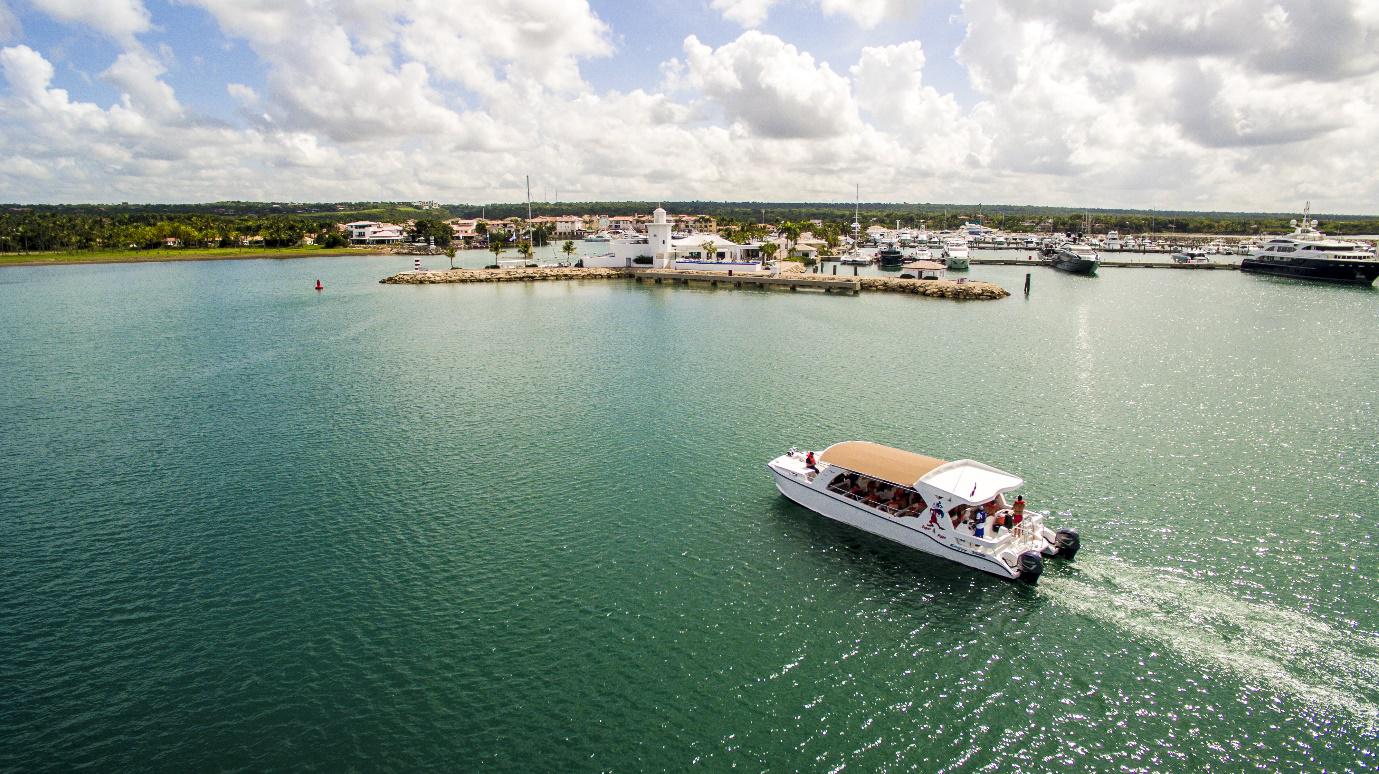
A tour visiting beautiful Catalina Island, well known for its spectacular snorkeling activity. On the way to the island, you will briefly sail through the river mouth of the Chavon River and pass in front of the Casa de Campo Marina. It includes national drinks featured at our open bar, lunch buffet, and free time in an exclusive Beach Club with tropical-Caribbean animation by our crew

Tour description

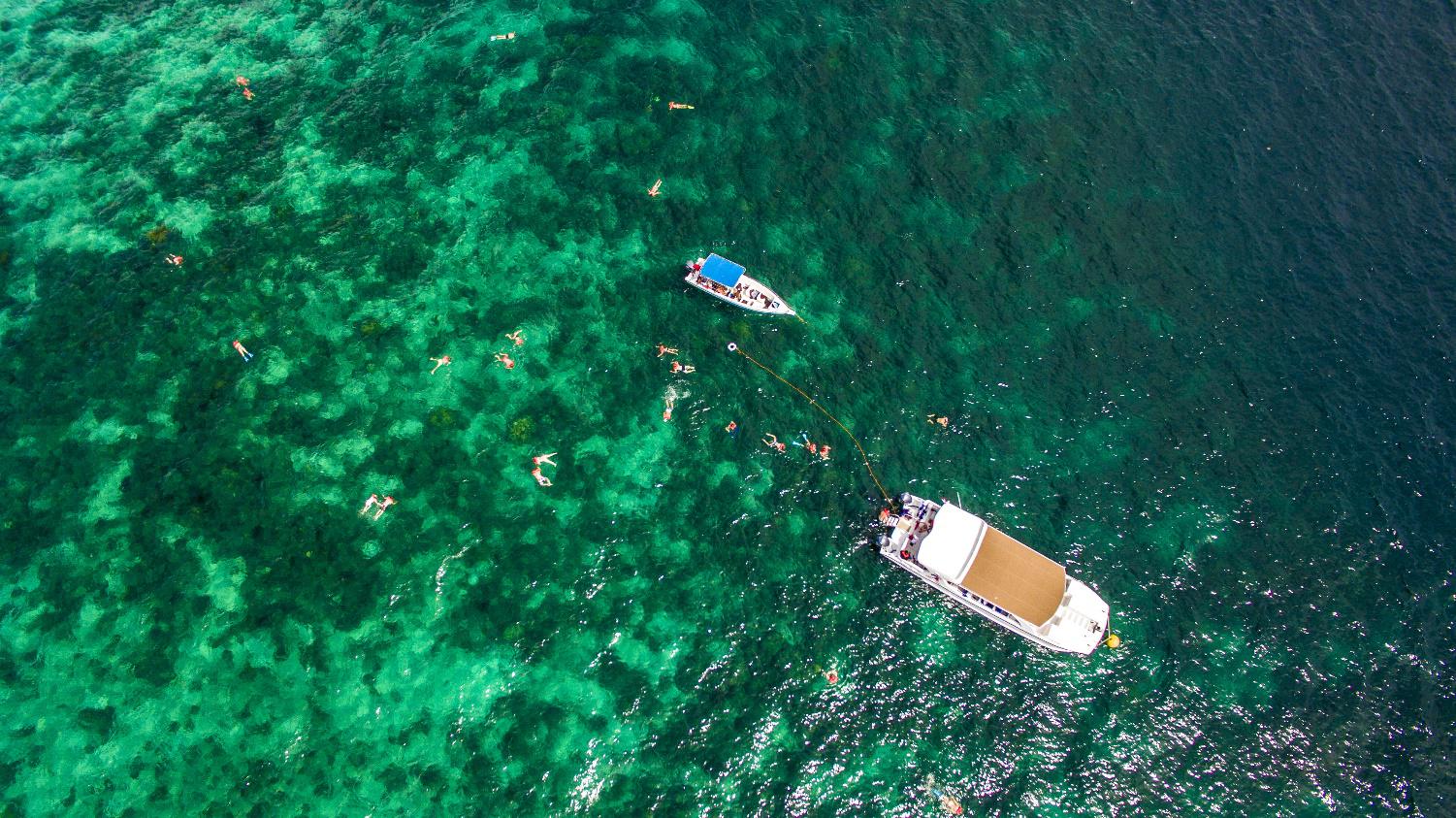
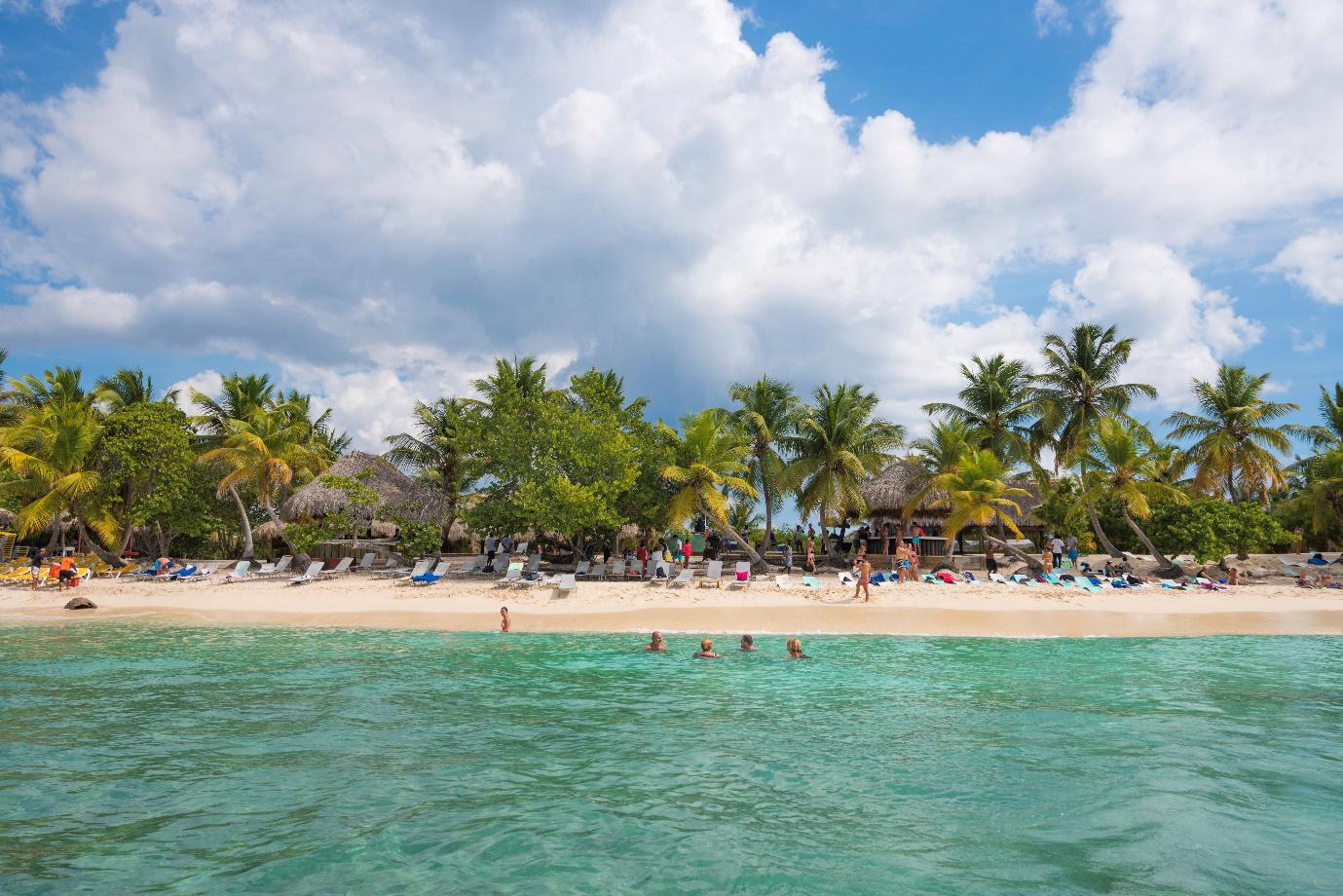
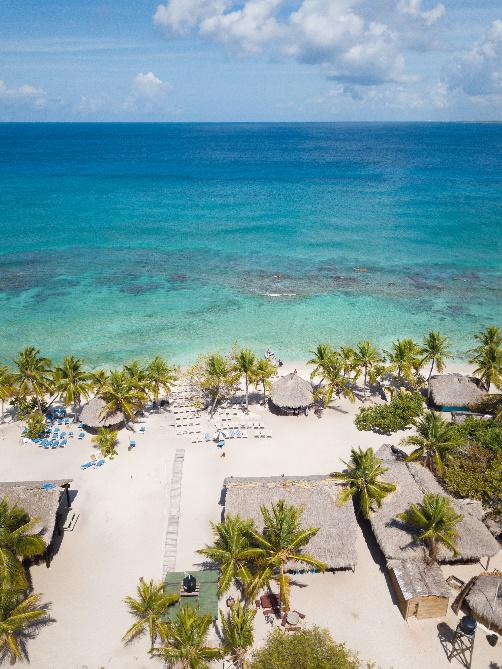
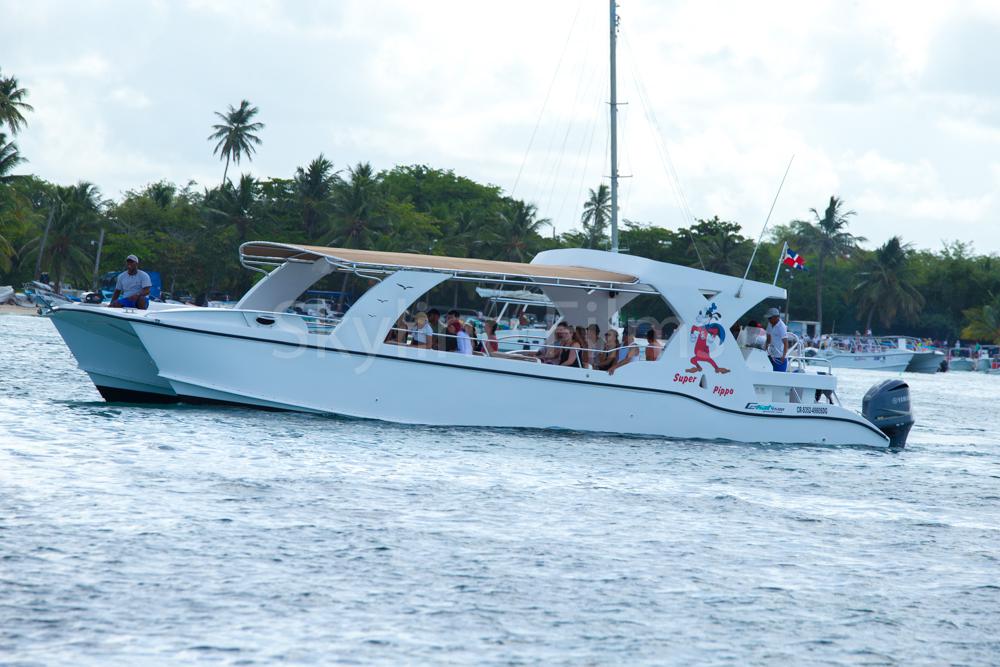
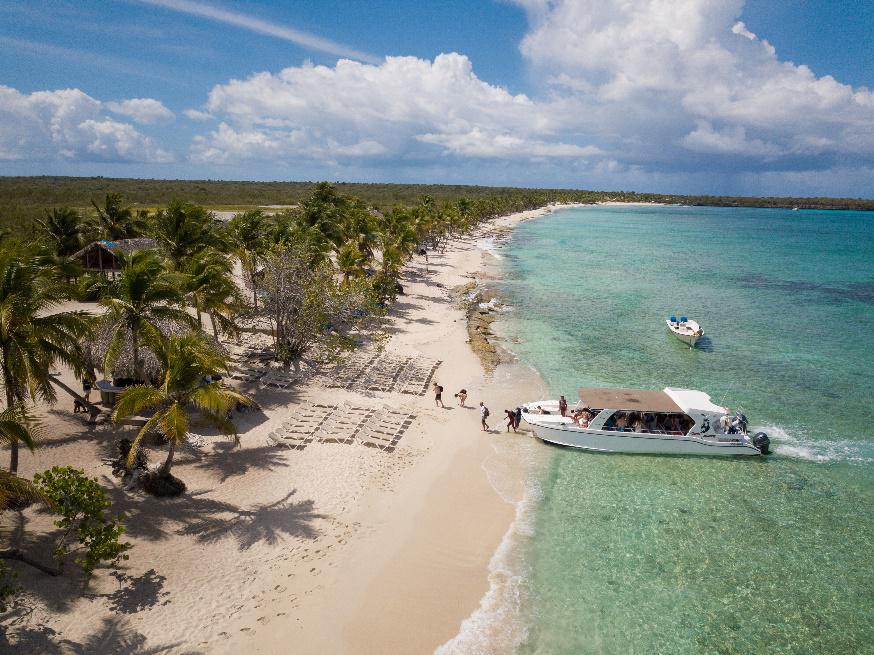
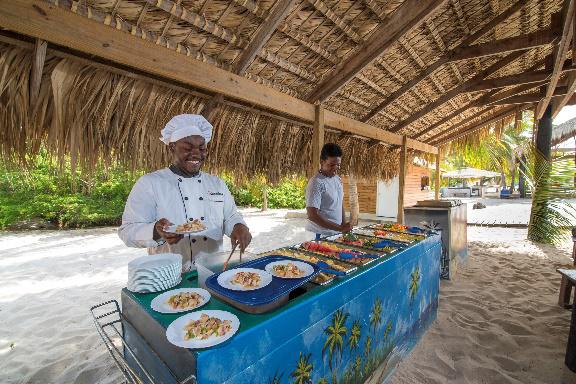
Leaving from the Fishing Village of Bayahibe and sailing towards Catalina Island, guests will pass by Casa de Campo Marina, and make a brief incursion navigating the river mouth of the Chavon River. Guests will then head to Catalina Island to enjoy a spectacular snorkeling location in the well-known area called La Pared. The necessary equipment for the activity will be provided. The tour will continue to the exclusive Beach Club, where guests will have free time to enjoy and spend on the relaxing white beach and crystal-clear sea. Also, our favorite drinks, ‘‘Santo Libre’’ or ‘‘Cuba Libre,’’ will be available in the open bar of national drinks and sodas. Don’t forget to ask for it! A delicious lunch with an assorted buffet will be available. After lunch, according to your desire, you can take part in fun and dances animated by our crew or keep enjoying your free time sunbathing and relaxing.

Note: Alcoholic drinks will be served only after the snorkeling activity.

Highlights

  • Spectacular Snorkeling

  • Views of Rio Chavon and Marina Casa de Campo

  • National drinks open bar

  • Catalina exclusive Beach Club

What’s Included

  • English speaking Tour Guide Service

  • Ground Transportation in Buses with A/C

  • Entrance fee to the National Park of the East

  • Navigation trip, in Sailing Catamaran or Motomaran

  • Snorkel Equipment

  • National Drinks Open Bar

    • Water, Soft Drinks on Board, navigating before Snorkeling

    • Rum, Water, Soft Drinks on Board, navigating after Snorkeling

    • Beer, Rum, Water, Soft Drinks at the Catalina Beach Club

  • Lunch buffet at the Catalina Beach Club

Recommendations

  • Beach Clothes

  • swimwear

  • Comfortable Shoes

  • Beach Towel

  • Sunglasses

  • Sunscreen

  • Hat or Cap

Duration

  • Full Day Activity

  • Activity Duration, 6 to 7 hours

  • Hotels Pick-Up and Transfers to/from Bayahibe, from 1 hour and a half to 2 and a half hours approximately each way

  • Duration, Activity + Transportation, 7 hours and a half to 12 hours approximately, depending on the location of your hotel

Availability to Book the Activity

  • Ask us for your desired day or range of days

Children’s policy

  • Children: older than 2 years younger than 12 years

  • Infants: younger than 2 years

Pregnancy policy

  • Due to the characteristics of navigation, pregnant women are not allowed on this activity

Special requirements (for the Snorkel)

  • Minimum age to snorkel, 6 years

  • Children always accompanied by adults

HIGHLIGHTS

  • Spectacular Snorkel
  • Views of Rio Chavon and Marina Casa de Campo
  • Open Bar
  • Catalina Exclusive Beach Club

Included/Excluded

  • Tour Guide Service
  • Ground Transportation in Buses with Air Conditioning
  • Maritime Transport: Sailing Catamaran or Motomaran
  • Entrance to the National Park of the East
  • Snorkel Equipment
  • Open Bar, National Drinks
  • Buffet Lunch
  • Additional Services
  • Insurance

Durations

Fullday (+7hours)

Languages

English
Espanol

Tour's Location

Dominican Republic

Reviews

5/5
Excellent
(1,406 reviews)
Excellent
1406
Very Good
0
Average
0
Poor
0
Terrible
0
1,406 reviews on this Tour - Showing 784 to 786
Cancùn

KennethFeabe

01/08/2025

kraken tor

Most plane crashes are ‘survivable’ [url=https://kra23c.cc]Кракен даркнет[/url] First, the good news. “The vast majority of aircraft accidents are survivable, and the majority of people in accidents survive,” says Galea. Since 1988, aircraft — and the seats inside them — must be built to withstand an impact of up to 16G, or g-force up to 16 times the force of gravity. That means, he says, that in most incidents, “it’s possible to survive the trauma of the impact of the crash.” For instance, he classes the initial Jeju Air incident as survivable — an assumed bird strike, engine loss and belly landing on the runway, without functioning landing gear. “Had it not smashed into the concrete reinforced obstacle at the end of the runway, it’s quite possible the majority, if not everyone, could have survived,” he says. The Azerbaijan Airlines crash, on the other hand, he classes as a non-survivable accident, and calls it a “miracle” that anyone made it out alive. https://kra23c.cc kra24 cc Most aircraft involved in accidents, however, are not — as suspicion is growing over the Azerbaijan crash — shot out of the sky. And with modern planes built to withstand impacts and slow the spread of fire, Galea puts the chances of surviving a “survivable” accident at at least 90%. Instead, he says, what makes the difference between life and death in most modern accidents is how fast passengers can evacuate. Aircraft today must show that they can be evacuated in 90 seconds in order to gain certification. But a theoretical evacuation — practiced with volunteers at the manufacturers’ premises — is very different from the reality of a panicked public onboard a jet that has just crash-landed. Galea, an evacuation expert, has conducted research for the UK’s Civil Aviation Authority (CAA) looking at the most “survivable” seats on a plane. His landmark research, conducted over several years in the early 2000s, looked at how passengers and crew behaved during a post-crash evacuation, rather than looking at the crashes themselves. By compiling data from 1,917 passengers and 155 crew involved in 105 accidents from 1977 to 1999, his team created a database of human behavior around plane crashes. His analysis of which exits passengers actually used “shattered many myths about aircraft evacuation,” he says. “Prior to my study, it was believed that passengers tend to use their boarding exit because it was the most familiar, and that passengers tend to go forward. My analysis of the data demonstrated that none of these myths were supported by the evidence.”
View More
Cancùn

JeromeVem

01/08/2025

кракен ссылка

The survivors of recent crashes were sitting at the back of the plane. What does that tell us about airplane safety? [url=https://kra23c.cc]kraken darknet[/url] Look at the photos of the two fatal air crashes of the last two weeks, and amid the horror and the anguish, one thought might come to mind for frequent flyers. The old frequent-flyer adage is that sitting at the back of the plane is a safer place to be than at the front — and the wreckage of both Azerbaijan Airlines flight 8243 and Jeju Air flight 2216 seem to bear that out. https://kra23c.cc kraken shop The 29 survivors of the Azeri crash were all sitting at the back of the plane, which split into two, leaving the rear half largely intact. The sole survivors of the South Korean crash, meanwhile, were the two flight attendants in their jumpseats in the very tail of the plane. So is that old adage — and the dark humor jokes about first and business class seats being good until there’s a problem with the plane — right after all? In 2015, TIME Magazine reporters wrote that they had combed through the records of all US plane crashes with both fatalities and survivors from 1985 to 2000, and found in a meta-analysis that seats in the back third of the aircraft had a 32% fatality rate overall, compared with 38% in the front third and 39% in the middle third. Even better, they found, were middle seats in that back third of the cabin, with a 28% fatality rate. The “worst” seats were aisles in the middle third of the aircraft, with a 44% fatality rate. But does that still hold true in 2024? According to aviation safety experts, it’s an old wives’ tale. “There isn’t any data that shows a correlation of seating to survivability,” says Hassan Shahidi, president of the Flight Safety Foundation. “Every accident is different.” “If we’re talking about a fatal crash, then there is almost no difference where one sits,” says Cheng-Lung Wu, associate professor at the School of Aviation of the University of New South Wales, Sydney. Ed Galea, professor of fire safety engineering at London’s University of Greenwich, who has conducted landmark studies on plane crash evacuations, warns, “There is no magic safest seat.”
View More
Cancùn

EliasFraum

01/08/2025

аттестат купить окончание

vindecoder.expert kia lookup by vin lamborghini vin decoder

Write a review

From: $79,00
5 (1406 Reviews)

    Send a message

    Owner

    BestInternationalTours

    Member Since 2022

    Explore other options

    ×